
Turning Science into Treatments that Matter
Rho signaling governs key mechanisms of neuronal repair and blood–brain barrier integrity that are disrupted in disease.
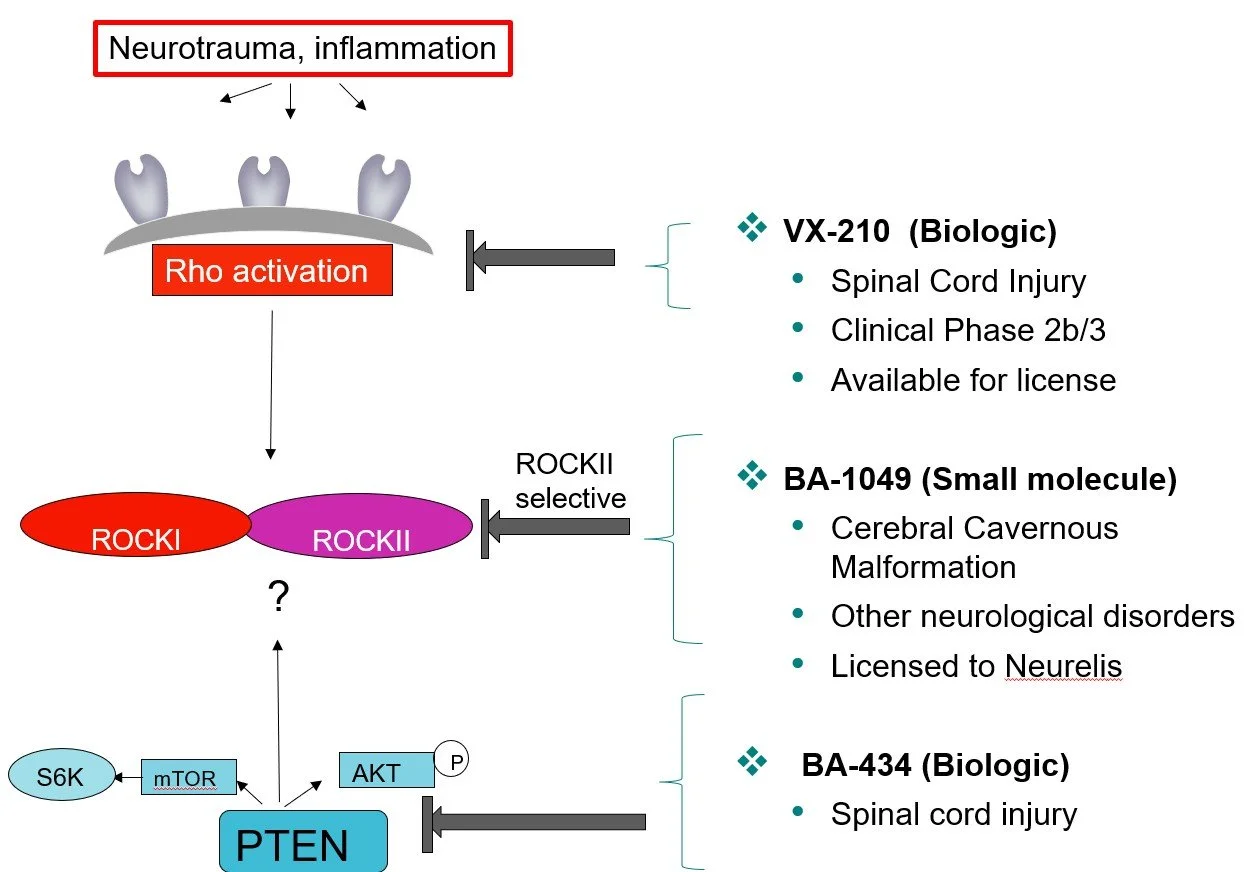
The Rho signaling pathway acts as a central control system inside cells, regulating their cell shape and how they move, grow, and interact with other cells. When Rho signaling equilibrium is disrupted, there is a cascade of events that contribute to disease. By targeting different points along the Rho signaling pathway, we can tailor therapies to the underlying biology of neurotrauma and neurovascular disorders.
BioAxone’s scientific team has unmatched knowledge and a deep understanding of Rho signaling pathways. This knowledge and understanding emanates from over 20 years of research led by our founder into the key signaling pathways and proteins that inhibit axon regeneration in the central nervous system.
Rho signaling pathway coordinates cell survival, axon growth and the blood brain barrier. Rho and Rho kinase 2 (ROCK2) are both over-activated by neurotrauma and by disease.
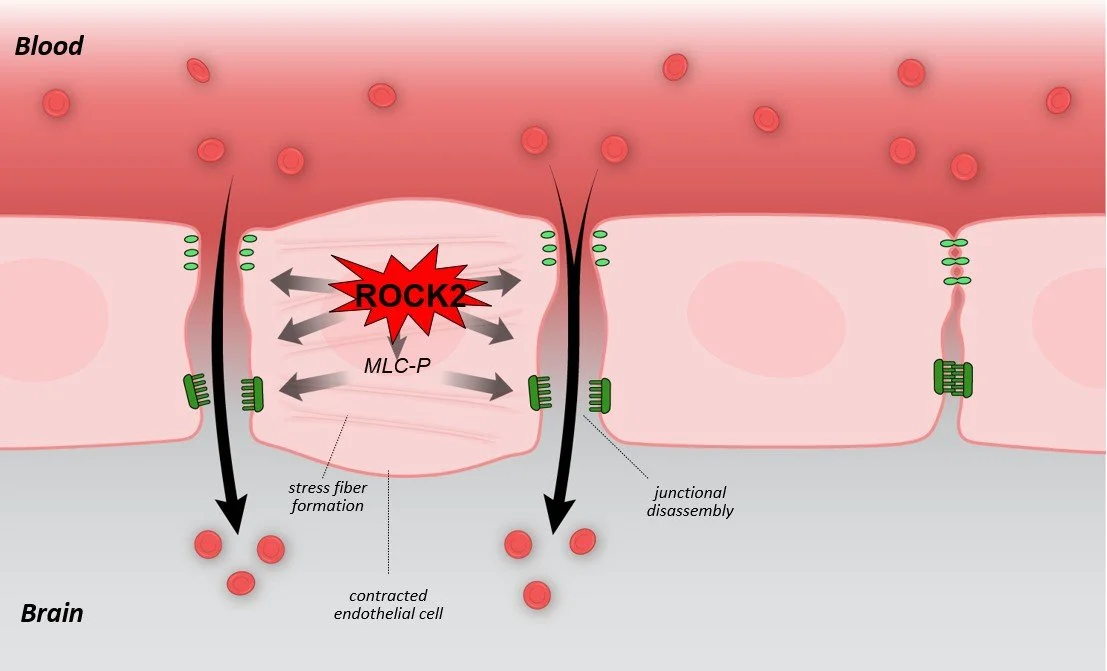
Blood Brain Barrier
In CCM, endothelial cell dysfunction is driven by overactivation of ROCK2. BA-1049 is a ROCK inhibitor that restores blood–brain barrier integrity and reduces disease severity in preclinical studies.
Neurotrauma
The importance of the Rho signaling pathway in axon regeneration was first demonstrated by BioAxone founder Dr. McKerracher through the use of C3 transferase, an enzyme from Clostridium botulinum that inactivates Rho. C3 transferase is an enzyme that ADP-ribosylates Rho to lock Rho in the inactive state. Cell penetration by the wild-type C3 transferase is very low, limiting its use for clinical development, and BioAxone developed a cell and tissue penetrating form, called BA-210.
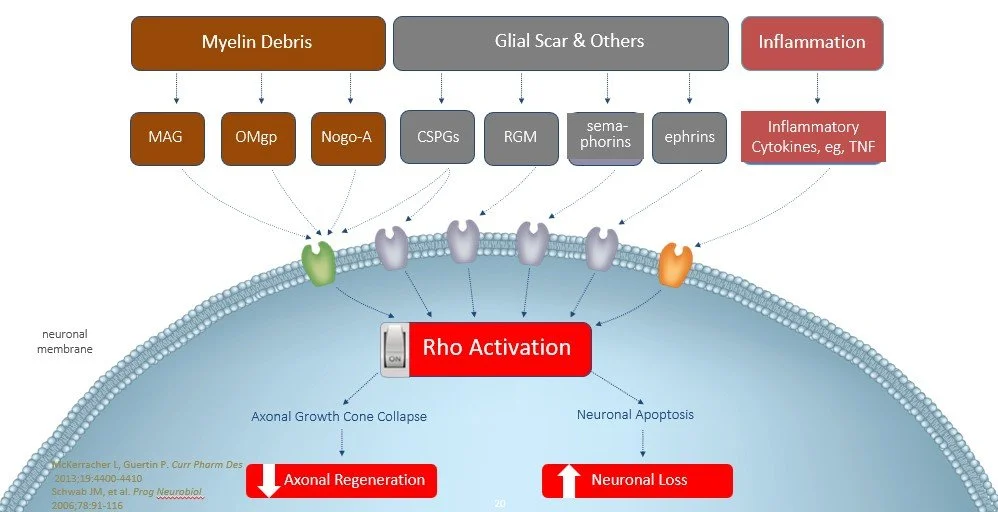
Laboratory research showed that BA-210 was neuroprotective to damaged neurons, promoted axon regeneration, and reduced the destructive inflammatory response. In rats and mice it promoted functional recovery of walking ability after spinal cord injury.